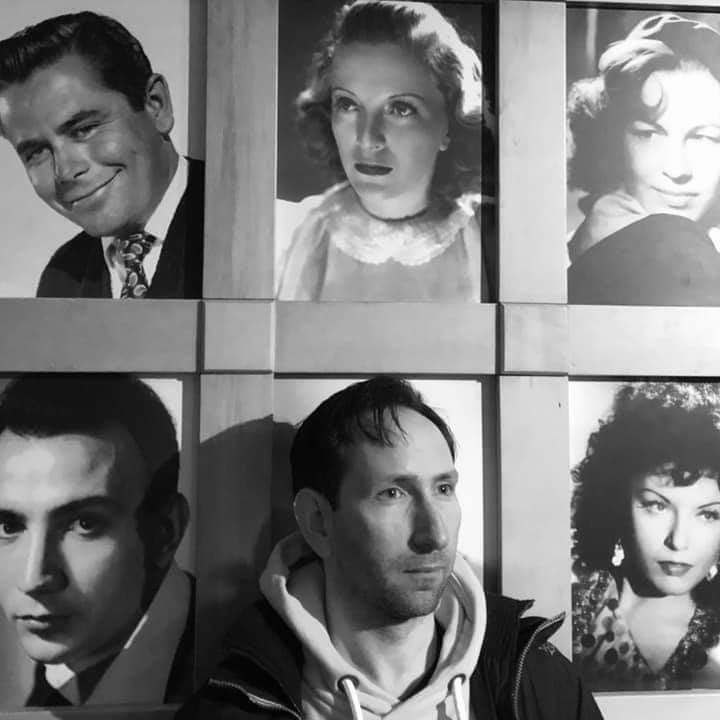
I recently got the opportunity to interview my colleague and friend Phil. Phil has been doing Stand-Up for the last year and I have always been fascinated in his journey, after seeing him live previously and hearing that he was going to be brave enough to do a set in front of his colleagues and even some of his own staff I jumped at the chance not only to introduce him but to be able to ask him questions that had been on my mind for some time. It’s rare I get to see someone at an early stage of their journey but it’s also a privilege to seem them mould their style over time and learn to perfect it.
What you’ll see below is a link to his set which I would encourage you to watch first (and subscribe to his Youtube channel!) then please take the time to read the questions and answers, which were also asked live in front of the audience.
Has comedy always been a Part of your life?
Yes, is the short answer. I have always watched standup comedy and I’ve always in my teens watched the most offensive comedy I can find. Even now I will see a gig once or twice a month if I can so it is very much a big part of my life.
What is it that made you want to start Stand Up comedy
There is a deep dark question, so I have always been interested in it and a friend of mine unfortunately passed away due to cancer, so I thought it would be a good idea to start doing stand up initially to raise money for charity. I did a small Comedy workshop as my Brother at the time did some charity boxing, I saw he raised a good amount of money for getting punched in the face, but I didn’t fancy getting punched myself, so I looked into other options of which Comedy was one of them.
It was an 8-week training with a professional to get ready for the initial gig which was last November during the Black Friday and Cyber Monday weekend. It was in front of roughly 300 people and I was able to raise almost £7000. Most of that was from friend and work colleagues, it was greatly appreciated but I was certainly the least popular member of the comedy course because they could not catch up with what I’d raised, the tickets sold or the amount of people who came, but it was all for a good cause!
How would you describe your style of comedy?
I’d say observational or situational as I try to focus on what happens in everyday life. I have no interest in political stuff so I try to steer away from some of those topics as much as possible.
How was the initial process of starting to do Comedy, you mentioned your first gig but what was that like for you and how did it go?
First of all I sign up to as many gigs as I can, there are open mic nights all across London and the surrounding areas, so far I’ve done 48 gigs since February, I have 2 more left for the end of this year as I’d like to reach 50. The first gig was scary but many of us were in the same boat and I was already happy with the amount I’d raised
How do you overcome nerves before going on stage
As with most things, as I am emotionally dead as my colleagues will tell you, I don’t think I get too nervous. Most gigs at this stage are not going to reach 300 people like my initial one and even today this amount of people is large but it’s not as large as then. At open mic is could be anywhere between 5,10 up to 25 people there which is a lot more manageable. Half of those rooms will be comedians as well, some of which will bring people with them. I don’t think I get too nervous.
So is it more nerve-wracking today compared to usual?
Yes a little bit, but in any gig once you get a few laughs from the audience you can relax a little bit and just try not to forget what you’re going to say… that’s the hardest part really to not forget what you want to say or what you have planned, try to remember the topic. Today is the only day since August that I’ve had my notes with me because I knew I was in front of many people I know.
I usually do the same 5 minutes of jokes but change one or two every now and then. It’s not going to be fresh jokes every single time it’s an interesting process to write jokes. The breakdown is the premise, the setup and the punch line. If you do that wrong the room will look at you like “what are you doing?”. So those of you that have seen me before may hear the same jokes sometimes but generally the room will always be different and have a newer audience so to practice the same jokes helps them become like muscle memory, the more you do something the better you get at it… and one day maybe get paid for it!
I think we’ve had a very good crowd today, but how do you overcomes hecklers? Have you had any particularly bad ones?
I’m quiet lucky as I have not really had any but I have had some odd rooms where people are there who don’t understand the concept of stand up comedy. As many open mics are in the Pub sometimes people will sit down with their drink and try talking to you while you are performing or mid flow of your set. I had a guy recently who was stopping me during my joke and giving me alternative names for the joke…
It’s an interesting process to think of ideas, my last joke really happened to me I just thought it was funny but this was before I even started the process to begin stand up. The Elephant joke as well I learnt about that just through conversations at work and thought I’d make use of it. Sometimes you also have the hopefully not factual jokes like me being a family disappointment as well. So what you need to do with joke writing is take people on a story where they think they know what you’re going to say but with a punchline that they do not expect. We have a ‘rule of three’ where we will do ‘serious, serious, joke’ or if you are particularly good you could do ‘Joke, Joke, Very funny Joke’ but the last one would need to be really unexpected.
Who in the world of comedy do you look up to, who inspires you and why?
Apart from you!? There are quite a few, but currently Jimmy Carr and Ricky Gervais who are quite controversial but if you look through the shock factor of their material there is either a serious message or you know they are joking and you think “why am I offended it’s clearly a joke”. Saying that, whatever your jokes are you always have the chance of offending someone or someone on anothers behalf.
I also like Frankie Boyle because he was quite controversial. When I was first watching comedy though I was really in to Eddie Murphy and if you’ve seen his stand-up you’ll know it’s very inappropriate and quite insult as well as off putting to some people. What’s interesting sometimes though is that you’ll see a new stand-up from somebody but then go back to one they did 15-20 years ago and you’ll see the same jokes it’s the art of perfecting it by changing some words or the topic.
I now, because of the course and my stand-up I look at Comedy in a different way, I don’t look at it just to laugh I think about how the comedian got their joke to that point, I think about their thought process, so for me the cleverer comedians are better than the slapstick sort
Is there a balance between emulation and being inspired?
There is, what is important to try and do is find my own character / persona and be relatable and likable to the audience, I don’t want to copy another comedian because people will just go and watch that comedian not someone trying to be them.
How do you move forward after a bad set and prepare yourself for your next set?
First of all delete the recording! I’ve only had two bad gigs, one was early on in my career, I’d had a great set two days before and felt confident but on this one I froze after a single minute and went to sit back down again. This is all about the practice I mentioned earlier because you can bring yourself back during a bad set, the best rule which isn’t mine is the 11oclock rule.
If you’ve done something good or bad you give yourself from that point until 11 o’clock either that night or the next day to think about it, stew on it, stress about it or celebrate it but then you move on and start again, I think this could be used in many walks of life.
I’ve learnt a lot in my previous gigs really and can take a lot away from them all both positive and negative.
How do you know when to retire a joke or add new ones
There is no simple answer, generally try a new joke a few times if it falls flat multiple times then re-write or retire it, I like to use my regular key jokes and add new one or two ones in between, trying to remember a whole set of new jokes can be more disruptive and harder to memorise
What is your ultimate goal with Comedy
I don’t really know, the world of comedy is an interesting one, it takes years to start getting paid for it. I am currently enjoying it as a hobby and keeping that up but I like the balance of work, the hobby and everything else in my life right now. I will try to do a few more, my wife signs me up for a lot of gigs and I have one next year at Bolton Pride. I think for me it’s about pushing myself more and more, usually I have 5 minutes of jokes and today it’s been 15, so it’s about going longer, the longer you go the more you then start to get paid for it or become more serious about it.
I don’t think I’ll be leaving my current job to move to comedy, I’m having fun for now and I hope that continues.
Where can people follow you?
You can find Phil in venues in and around the Berkshire and London area or find some of his previous sets online at his Youtube https://www.youtube.com/@PhillipReiss.
I wanted to thank Phil again for his time and hope to see his Stand-up again soon!
 Interviews With You! By Lewis Jane
Leave a comment